
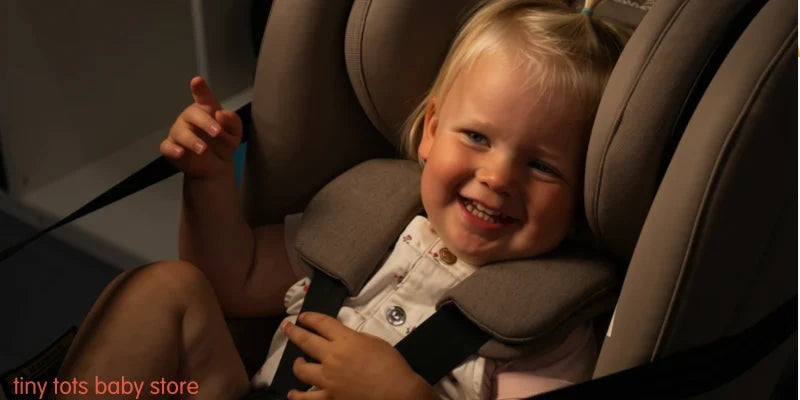
Choosing the right car seat is one of the most important decisions you’ll make as a parent. With so many different types of restraints, age recommendations and safety features to consider, it can sometimes feel confusing.
The good news is that you don’t have to navigate it alone.
This guide explains the Australian child restraint requirements, the different types of car seats available, and some simple best-practice tips to help you choose the right restraint as your child grows.
Important: Australian child restraint laws set the minimum legal requirements. At Tiny Tots Baby store, we believe parents should aim for the safest option available within their child’s restraint limits — not simply move to the next stage because their child has reached a certain age.
What are the Australian car seat laws?
In Australia, children must use an appropriate child restraint, booster seat or seatbelt according to their age and size. The safest approach is to keep your child in their current restraint until they have outgrown it, rather than moving them to the next stage simply because of their age.
Birth to 6 months
Children must travel in a rearward-facing child restraint with an inbuilt harness.
Sulani’s best-practice advice
Babies have developing neck muscles and relatively large heads, making them particularly vulnerable to serious injury in a crash.
Keeping your baby rearward-facing for as long as possible provides important protection for their head, neck and spine. We recommend continuing to use the rearward-facing position until your child reaches the maximum shoulder height or size limit of their restraint.
Turning 6 months does not mean your baby needs to face forward. If they still fit safely within the rearward-facing limits of their restraint, keeping them rearward-facing is the preferred option.
Transport Victoria recommends keeping children rearward-facing until they outgrow their rearward-facing restraint, ideally until at least 12 months of age. Some restraints allow children to remain rearward-facing well beyond this age.
7 months to under 4 years
Children must use a suitable child restraint. It is safest to keep your child rearward-facing until they outgrow their rearward-facing restraint. Once they have outgrown it, they can move into a forward-facing restraint with an inbuilt harness.
Sulani’s best-practice advice
Don’t rush the move from rearward-facing to forward-facing.
Every child grows at a different rate. Check the shoulder height markers on your restraint and follow the manufacturer's instructions. When your child still fits safely within the rearward-facing limits, there is no need to turn them forward-facing simply because they have reached a certain age.
Once your child has outgrown the rearward-facing position, a forward-facing restraint with an inbuilt harness provides the next stage of protection.
4 years to under 7 years
Children must use either a suitable child restraint or booster seat. However, the safest approach is to move to a booster only after your child has outgrown their forward-facing restraint with an inbuilt harness.
Sulani’s best-practice advice
Turning 4 does not automatically mean your child is ready for a booster seat.
Keep your child in their forward-facing restraint with an inbuilt harness for as long as they remain within the restraint’s recommended size limits.
Some Type G restraints are designed to accommodate children to approximately 8–10 years of age, depending on the individual restraint and the child’s size.
If your child still fits within the forward-facing limits, there is no need to move them to a booster simply because they have turned 4.
7 years and over
From 7 years, children can use a booster seat or a suitable forward-facing restraint with an inbuilt harness. They should continue using a booster until the adult seatbelt fits correctly.
About the Auther
Sulani is an accredited child restraint installer in Australia, with more than 8 years of industry experience and close relationships with leading child restraint manufacturers.
Our focus is simple: helping families make informed choices and giving parents confidence that their child is travelling as safely as possible.
Accreditation
Australian Child Restraint Resource Initiative (ACRI)
Registration number: 1006208
Resouces
https://acri.com.au/